

Looking for the best places to hike in Spain? Here’s the ultimate list of natural settings and trails that belong on any Spain bucket list.
- This post contains affiliate links from which I earn a commission (at no extra cost to you). For more info, please read my disclosure. As an Amazon Associate, I earn from qualifying purchases.
Best places for hiking in Spain (2026)
Does Spain have good hiking?
Spain offers some epic hikes, with the two most famous trails for international travelers being the Caminito del Rey and Congost de Mont-rebei. However, the largest number of unique trails can be found within two major national parks: Picos de Europa and Ordesa y Monte Perdido. If you’re visiting Spain to enjoy its natural beauty and can only choose one destination, I would recommend the Pyrenees mountain range. Additionally, the Canary Islands offer unique hiking options, thanks to the diverse landscapes of the archipelago, including the volcanic fields of Teide and Timanfaya, as well as the forests of Anaga and Garajonay.
What is the most scenic hike in Spain?
The most famous scenic hikes in Spain are the Caminito del Rey in Southern Spain and the Congost de Mont-rebei, while the renowned pilgrimage trail across Northern Spain is El Camino de Santiago. My favorite scenic trails in Spain are also those that involve wooden or metal walkways, like the lesser-known Parrizal de Beleite or Pasarelas del Vero, as well as the trails in the Pyrenees that feature beautiful glacial lakes.

Best places for hiking in Spain
Here’s the ultimate list of my favorite hiking destinations in Spain, along with its most iconic trails worth experiencing at least once in a lifetime. Also, you can read more about my hiking essentials in this post.
1. Ordesa y Monte Perdido / The Pyrenees of Aragon
Ordesa y Monte Perdido is one of the most iconic Spanish national parks, located in the Pyrenees mountain range on the border between Spain and France. It is one of my absolute favorite destinations for hiking in Spain, as it is unmatched in terms of natural wonders. However, being part of the Aragonese Pyrenees, it is less well-known on the tourist track compared to the Pyrenees of Catalonia or the French Pyrenees. You can read more about my multiple trips to the region under the #Pyrenees hashtag.
The lakes of Astun
The hiking trail of Ruta de Los 7 Lagos de Astún (also known as 7 Ibones de Astún) was one of the highlights of our recent getaway to the Spanish Pyrenees of Aragon. In addition to the breathtaking mountain peaks and crystal-clear lakes, this route takes you across the Spain-France border several times in a single day. The trail starts at the Astún Ski Station, where you take the lift to Ibon de Truchas, the first lake. Keep in mind that you’ll be hiking at an altitude of 2,100 meters, which means less oxygen. Although the trail is only 13.55 km long, it’s not for everyone. Ruta de Los 7 Lagos de Astún is often described as a hike suitable for all types of people, but in my opinion, it’s not. Yet, if you’re up for a bit of a challenge, the hike will take you through spectacular landscapes, starting from Ibon de Truchas and passing through Ibon de Escalar, Collado de Monjes, Lac Bersau, Lac Gentau, Lac Miey, and then back to the Astún Ski lift.


The Añisclo Canyon
While the Ruta por el Cañón de Añisclo is an easy 45-minute walk (2 km), the unique natural surroundings make it one of my favorite hikes in the Pyrenees. This trail starts at the San Urbez parking area, but to get there, you’ll drive along the stunning local road, HU-631, through the Añisclo Canyon. This scenic drive feels like an experience in itself. You can see the views in my Pyrenees Reel and Highlights on Instagram. Even in the summer months, the route provides shelter from the heat, thanks to the lush local greenery. Along the hike, you’ll come across the remains of an ancient watermill, Molino de Aso, a waterfall, the cave-church Ermita de San Urbez, and the medieval bridge, Puente Medieval de San Urbez. For more experienced hikers, there are options to extend the route by taking another trail near Ermita de San Urbez towards the village of Sercué, La Ripareta, and Fuen Blanca, which can take up to 5-6 hours one way.


2. Tenerife
Anaga Forest Nature Reserve
Anaga Forest Nature Reserve in Tenerife is one of my favorite places for hiking in Spain. Its Sendero El Bosque Encantado feels like experiencing a magical forest in real life. Keep in mind that local authorities limit the number of hikers per day for this particular trail, so you need to book your access permission in advance via Cabildo de Tenerife. However, the route is definitely worth experiencing at least once in a lifetime. It is a circular 6.7-km-long trail, also known as Sendero El Pijaral. If you’re unable to secure permission, don’t worry – there are some great alternatives, such as El Sendero de la Hija Cambada or Bosque de Los Enigmas. Additionally, the most visited trail in Anaga Forest, Sendero de Los Sentidos (near the parking lot and visitor center), doesn’t require permission and is suitable for children, as it is even partially adapted for disabled visitors and strollers. Another location quite similar to Anaga Forest is Garajonay National Park on the nearby island of La Gomera, which is known for the romantic legend associated with it.

Teide National Park
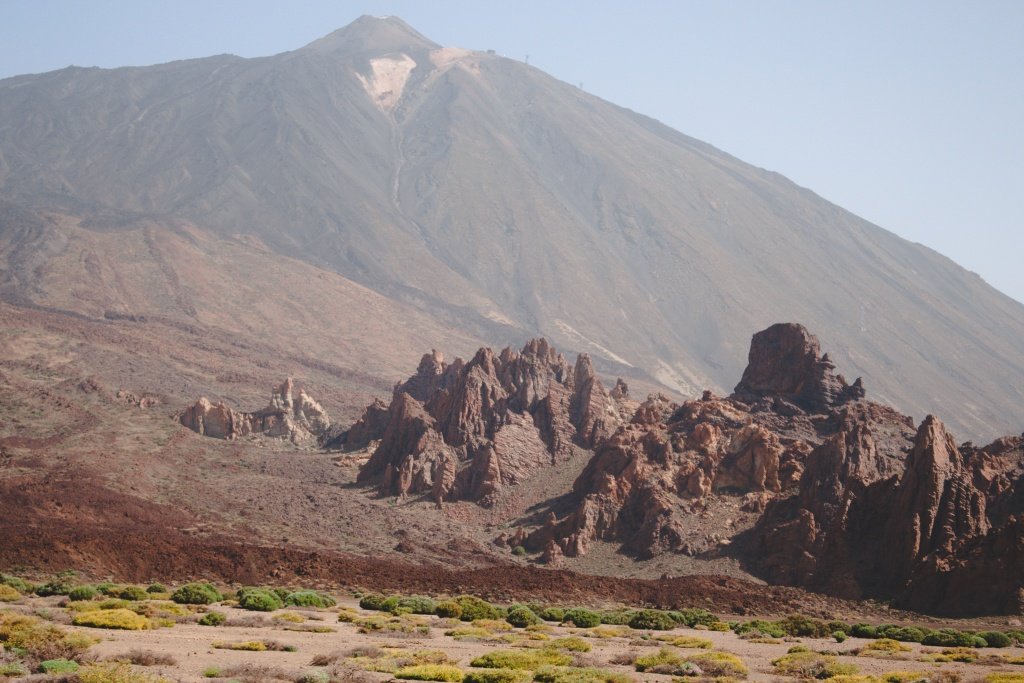
In addition, the Spanish island of Tenerife is known for some of the most stunning volcanic landscapes in the Canary Islands, while its Mount Teide stands out as the highest peak in the country and the tallest volcano in all of Europe. Teide is a must-see on many Spain bucket lists, and countless adventure seekers set the trail to its summit as a personal challenge. There is even a mysterious local Spanish legend that claims from the top of Teide, one can see the secret 9th island of the Canary Archipelago.
Interestingly, this 9th island appears on many ancient maps from the 13th century to 1755, but no one has ever proven its existence. The island is said to be located near El Hierro. If you aim to reach the peak of Teide and take in the views, you’ll need to apply for permission in advance here. To access the trail, you’ll take a cable car (teleférico) and then follow the 8.3 km route to the top. This is a challenging route with a 1,350-meter elevation gain.
However, don’t let this trail discourage you from hiking in Teide National Park. Even if you’re unable to reach the peak, hiking across Teide’s moon-like, otherworldly landscapes is a once-in-a-lifetime experience. Alternatively, you can explore 41 other hiking routes of the park, including the beautiful Ruta de Siete Cañadas (16.6 km) and Roques de García (3.5 km).
3. Southern Spain
Caminito del Rey
Caminito del Rey is one of the most famous hikes in Spain and one of the top attractions in Southern Spain. Also known as “The King’s Little Path,” it is an iconic walkway pinned along the steep walls of a narrow gorge in El Chorro, located in the province of Malaga. The trail was re-opened in 2015 and has since become renowned as one of the world’s most dangerous walkways. It is a perfect destination for those seeking adventurous activities in Spain.
There are two types of entrances available – guided and non-guided. However, one of the main drawbacks for spontaneous travelers is that tickets are often sold out months in advance. Alternatively, you can book a guided tour through local agencies if the official website is fully booked. One important detail for family travelers in Spain: children under 8 years old are not allowed on the Caminito del Rey trail.

Sierra Nevada
While Sierra Nevada in southern Spain is mostly known for skiing, it is also a great destination for hiking in the summer. Its most famous route, the Mulhacén Summit Trail, leads to the highest peak of the Iberian Peninsula at 3,479 meters. Other unique trails in the area include Laguna de las Yeguas and the Alpujarras Trails.
4. Picos de Europa / Asturias
Picos de Europa was the first national park in Spain, and it is located in Asturias, northern Spain. The region boasts beautiful landscapes and hiking options. You can check out my recent Asturias road trip and my list of things to do in Asturias.
Ruta del Cares
Ruta del Cares (or The Cares Trail) is one of the most beautiful hikes in Spain. This trail is still on my bucket list, as during my last trip to Asturias, the weather was completely against me. Initially, this hiking trail was designed to transport supplies to workers at a local hydroelectric plant in Camarmeña. Today, it is one of the most popular places for hiking in Spain, thanks to its dramatic landscapes, which include rock tunnels, bridges, and the breathtaking heights of the Cares Gorge. Ruta del Cares is 12 km long and begins at Poncebos, taking you to Cain (or vice versa). However, completing the trail in one day means walking almost 25 km. Another option is to arrange a transfer for the return to the parking at Poncebos (or Cain, depending on where you started the trail). For this popular hike, it’s best to avoid the peak summer season and Easter week.
Lakes of Covadonga
Another unique natural setting in Picos de Europa National Park is the Lake of Covadonga, where there are many trails to explore. Unfortunately, I still need to return here, as my last attempt to visit the Lakes of Covadonga didn’t go well. I was unlucky with the weather – despite visiting in July, the area was foggy, and it rained for all three days of my stay.


5. The Basque Country
The Basque Country in northern Spain is a great destination for nature lovers, as it is rich in greenery. The most famous natural settings here are Gorbea Natural Park and Urdaibai Biosphere Reserve, while the most popular hikes include the Bosque de Oma and the Salto del Nervión. You can read more about my recent Basque Country road trip in this post.
Bosque de Oma
One of the most unique settings for hiking in Spain is definitely the Bosque de Oma, as it combines art and nature in a remarkable way. Thousands of pine trees are covered with colors, revealing different images and compositions depending on the angle you view them from. The complete circular route is approximately 7 km long. It can be done with kids, but it is not adapted for disabled people or strollers. It’s best to visit early in the morning (preferably in the off-season or on weekdays). The Oma Forest feels like a magical Spanish woodland, which explains why it has become quite popular. I was lucky to explore it with no one around, but only half an hour later (around 11 a.m.), it was flooded with visitors.

Salto del Nervión
Santo de Nervión is the most famous waterfall in the Basque Country, with a drop of over 270 meters. It is one of the largest and most beautiful natural waterfalls in all of Western Europe. The waterfall is part of a circular 7.2 km trail that offers spectacular views of the Basque Country.
6. The Pre-Pyrenees of Spain
Another one of my favorite areas for hiking in Spain is the Pre-Pyrenees, the Spanish region located in front of the Pyrenees mountain range. You can read more about my recent trip to the Pre-Pyrenees in this post.
Pasarelas del Vero
One of the highlights of my recent Aragon road trip was the Pasarelas del Vero trail (also called Pasarelas de Alquézar). This hike takes you through a stunning gorge via metal walkways. Along the way, you’ll see lush greenery, small waterfalls, and even the beautiful Picamartillo Cave. The entrance fee is 4 euros per person. This trail is located in Alquézar, one of the most beautiful medieval villages in Spain, within the Parque Natural de la Sierra y los Cañones de Guara. If you’re not afraid of heights, this hike is great for the whole family (my kids, aged 4 and 6, both loved it). The entire route is 3.37 km and took us about 2 hours to complete. It’s definitely one of the coolest Spanish hikes I’ve experienced ever. You can check out the views on IG Reels and TikTok.

Mallos de Riglos
Another one of my favorite Spanish hikes is El Camino del Cielo de Mallos de Riglos. It’s a 5.4 km-long circular route in the small town of Riglos. This natural setting is undoubtedly one of the most beautiful places in Aragon and one of the top otherworldly landscapes in Spain. Despite being widely regarded as an easy hike, it was a bit challenging for our youngest daughter due to the elevation. Nevertheless, I felt the view was 100% worth the effort. We read in the Spanish media a recommendation to hike the trail clockwise (despite local signs suggesting the reverse). By going clockwise, you face a short but intense ascent, and after reaching the peak, the rest of the trail is a descent with breathtaking views.

7. Catalonia
While the region of Catalonia is world-renowned for Barcelona, it is also a fantastic destination for nature lovers. The main natural attractions not to be missed here are Aigüestortes National Park, Congost de Mont-rebei, and the La Garrotxa volcanic zone.
Aigüestortes National Park
While Aigüestortes National Park is the biggest natural gem of Catalonia, it is also located in the Spanish Pyrenees. The most famous trail here is the Ruta del Planell de Aigüestortes y Estany Llong, and to reach it, you’ll need to take an official shuttle from the village of Boí. You can read more about my weekend getaway to the region in this post.

Congost de Mont-rebei
Another spectacular hiking destination in Spain is Congost de Mont-rebei. You can read the full story of my visit in this post.

8. Cuenca
Another lesser-known destination for hiking in Spain is the region of Cuenca. It is a perfect spot for fans of hidden hikes, as its Serranía de Cuenca was a complete discovery during my recent road trip across the region. Although its most famous hike, Ruta de las Caras, is actually quite popular due to its proximity to Madrid.
Ruta de las Caras
Ruta de las Caras, or the Route of the Faces, is a unique trail in the Spanish province of Cuenca, featuring 18 sculptures of varying sizes, ranging from 7 to 4 meters tall. Carved by facade restorer Eulogio Reguillo and ceramicist Jorge Juan Maldonado in 1992, the figures are inspired by Indian gods, Buddhas, Templar crosses, and even Beethoven. This trail is an easy 1.5 km walk, but you can extend it into a 14 km circular hiking route by starting from the town of Buendía.
Serrania de Cuenca
Serranía de Cuenca is a stunning, lesser-known destination for nature lovers in Spain. One of its most unique trails is the Sendero Botánico de la Hoz de Beteta. You can read about it in this post.


9. Teruel
While Teruel is one of the least green areas in Spain and doesn’t offer as many hiking options as the Pyrenees, one of the region’s top natural gems is definitely the Parrizal de Beceite and Sierra de Albarracín.
Parrizal de Beceite
I enjoyed visiting Parrizal de Beceite during our trip to Matarranya Region in Teruel. To hike there, you need to reserve a parking ticket in advance, although it’s honestly not as complicated as with places like Anaga or Teide. During the peak season in July, I was able to get tickets just the day before visiting. The Parrizal de Beceite trail is one of the most unique hikes in Spain, as you walk on wooden pathways for most of the route. If you start from the parking area, it’s only 8 km round trip.
If you don’t have a parking ticket, you can still leave your car in the nearby town of Beceite and walk 5 km to the start of the trail. However, in my opinion, this isn’t worth it, as the most beautiful part of the hike begins after the Parrizal parking area. Without a parking ticket, you’ll add an extra 10 km to your itinerary with nothing particularly interesting along the way. Plus, cars going to and from the parking lot will pass by constantly.

Sierra de Albarracin
One of the most underrated natural settings in Spain is definitely Sierra de Albarracín, known for its secret hikes and the unique landscapes of Pinares del Rodeno. You can read more about my recent visit in this post.

10. Valencian Community
While the region of Valencia won’t be my first choice for a hiking trip to Spain, there are a few unique hikes in the area that I just can’t skip mentioning. For a more extensive list of hikes near Valencia, check out my other posts on hiking in Valencia and top hikes in Castellón.
Ruta del Acueducto Romano de Peña Cortada
Ruta del Acueducto Romano de Peña Cortada is one of my favorite hikes in Valencia, as it’s extremely unique. By following the trail, you walk across an authentic ancient Roman aqueduct (not something you can do every day) and later enter the impressive mountain tunnels. This route can be found between the small towns of Chelva and Calles. In my experience, most visitors reach Chelva and then follow a local unpaved road marked with “Peña Cortada” towards the parking area (also shown on Google Maps). It only takes about 15 minutes of walking to reach the Roman aqueduct and the tunnels, which is why this area was packed with people on Saturday. However, only a few visitors continue along the route. So, I wouldn’t say this hike is particularly busy, unlike another famous hike nearby – the Route of the Hanging Bridges.

Serra Calderona
Another beautiful area near Valencia is Serra Calderona, particularly known for its panoramic viewpoint, Mirador Garbí. You can check out more potential trails in the area here.
Penyagolosa
One of my favorite hikes in the Valencian Community is to the highest peak of the region, Penyagolosa. While it is located within the Valencian Community, it is a bit far to visit on a day trip from Valencia, although it is closer to Castellón. You can read more about the trail in this post.


Map of top Spanish hikes
Pin it

For more Spain travel tips check out my Pinterest board Spain Travel Collection and Flipboard Travel to Spain.

- Accommodation: For short stays, I usually book via Agoda and Booking
- Tours&excursions: My favorites for guided tours are GetYourGuide and Viator
- Museums&attractions: Get mobile tickets for attractions via Tiqets (use ATC5 code for a 5% discount via this link)
- Semi-private & private tours: LivTours is my favorite place for unique & crafted experiences in Europe
- For Foodies: Eatwith is a unique platform for finding culinary experiences with locals around the world
- Audio guides: Book audio excursions & tours in 35+ countries via WeGoTrip
- Flights: Find the best deals with Skyscanner and Kiwi
- Driving in a new country? – Check out Tripiamo guides (do not miss Tripiamo Driving in Spain Guide)
- Train&bus tickets: Currently, I book via Omio (10% off with code ATC10 for first-time customers)
- Car rental: To find the best deals, I use Discover Cars
- Top E-Sim: To avoid roaming fees, I like Holafly (use ATLIFESTYLECROSSROADS for for a 5% discount)
- Shop My Level8 Suitcase: get 15% off with the code ATC15 here
- Internet Security on the road: Connect safely to public Wi-Fi and bypass censorship with NordVPN
- Transfers: For individual transfer services, I like GetTransfer and Kiwitaxi
- Suitcases&Luggage: Discover where to store your luggage on the go with Radical Storage
- Travel Insurance: Find the best trip insurance plans via VisitorsCoverage and EKTA
- Compensation for delayed/canceled flights: Check out AirHelp and Compensair
- Renting Bikes: To find motorcycles, scooters, quads, and bicycles, I use BikesBooking
- Package Tours: Head to CheapOair and Expedia
- For Bloggers: To monetize my blog, I work with Travelpayouts and Stay22
- Website Owners: For hosting services, I work with and recommend Lyrical Host (get 10% off with my code ATC10)


So many more great hikes and adventures just waiting for me to come and explore. Thanks for sharing these awesome hikes. Curious about your expat life. Would you do it again?
Definitely yes! If it was not for my small kids, I’d be ready to set off on a new journey tomorrow lol Spain already feels like home for me, but the whole process of moving and adjusting was the most interesting, enriching and eye-opening experience ever. It´s like every new country you live in brings into the world the “new you”!
7 Ibones de Astun looks amazing! I should add that to my list. The Tenerife ones also look nice. I’ve only ever been to Lanzarote and Gran Canaria. Do you have any other recommendations on great hikes throughout the mountain region?
There are lots of beautiful trails in Ordesa y Monte Perdido National Park, like “Cola de Caballo” or “Circo Cotatuero”, and quite a few amazing ones in Aiguestortes National Park, like “Ruta de las Iglesias de la Vall de Boi” or “Estanys de Gerber”
Ruta de los 7 Lagos de Astun looks awesome! And how cool that it crosses the border multiple times. The less oxygen is tough, but it sounds worth it for the experience and those views!