

Follow this 3-day Asturias road trip itinerary if you don’t want to miss some of the most beautiful places in the region and discover unique landmarks in northern Spain.
- This post contains affiliate links from which I earn a commission (at no extra cost to you). For more info, please read my disclosure. As an Amazon Associate, I earn from qualifying purchases.
An Ultimate Asturias Road Trip Itinerary
What Makes Asturias Special and Why I Love Revisiting It
Asturias is a beautiful region in northern Spain, known for its wild, untamed nature – featuring Atlantic beaches, dramatic cliffs, and otherworldy beautiful landscapes, charming fishing villages, and delicious hearty dishes like fabada asturiana.
While Asturias has a bit of everything, from stunning nature to unique landmarks, I’d say it is one of my top three destinations in Spain for an unplugged holiday away from the city buzz and social media. Everything about Asturias, from its landscapes to the traditional local lifestyle, feels calm, peaceful, and wonderfully unhurried.
Asturias also home to one of Spain’s most iconic national parks, Picos de Europa. Unlike the dry and sun-drenched areas of central and southern Spain, Asturias is famously lush and green, a contrast made possible by its frequent rainfall throughout the year.
The region enjoys a mild oceanic climate. Summers are pleasantly cool, with average daytime temperatures around 20°C (68°F) and nights dipping to about 14°C (57°F). Spring and autumn tend to be refreshing: 14–16°C (57–61°F). Winters in Asturias are chilly but not extreme, like in the Pyrenees mountains, typically ranging from 9°C (48°F) during the day to 3°C (37°F) at night.
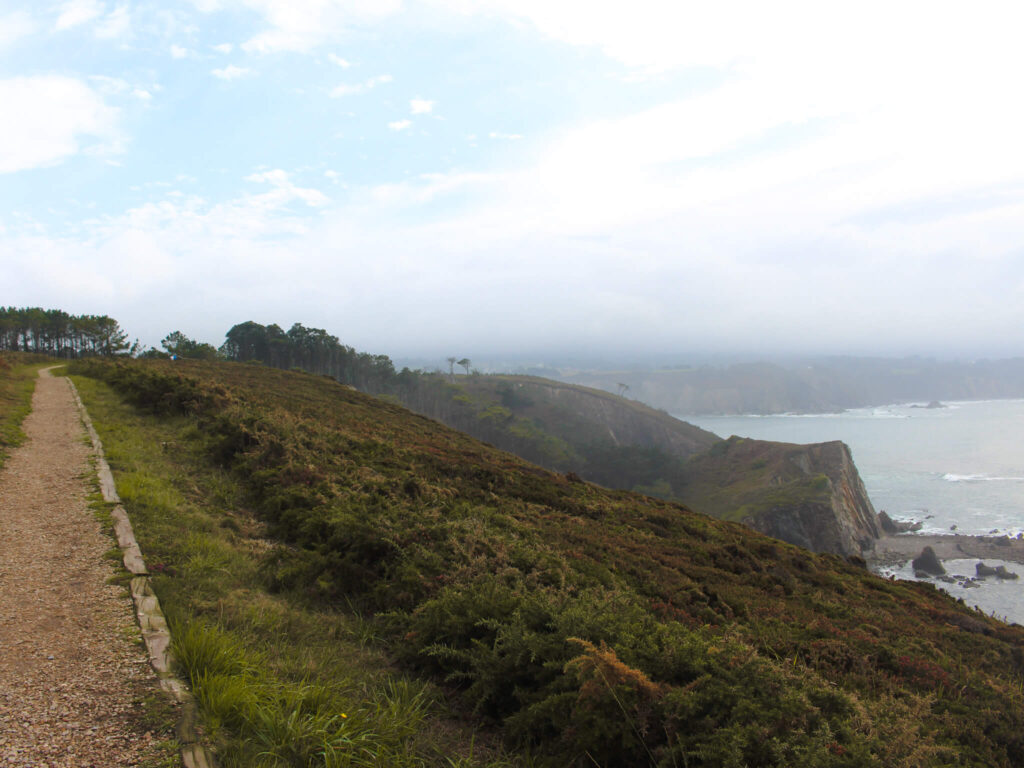
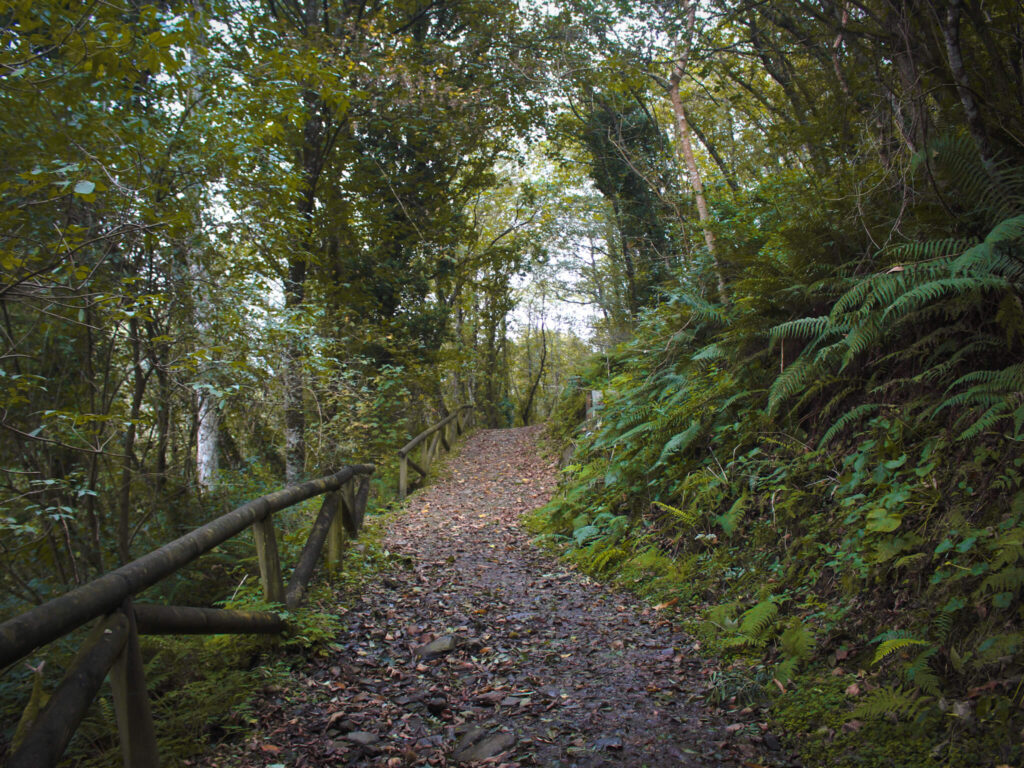
Rain is common all year round, so it’s essential to include layers and waterproof gear into your Spain packing list. Yet, as you might have seen in my recent YouTube vlog from Asturias, the foggy skies give the landscape its own unique charm, especially when hiking through the forests or along the ocean cliffs.
The capital of Asturias is Oviedo, but the region is often included in broader northern Spain itineraries, particularly for travelers starting in Bilbao, where most international flights arrive. If you’re planning to visit Asturias from Madrid, check out my post on Madrid road trip options to help with your planning.
This particular 3-day Asturias itinerary took place in July, but in this post, I also share suggestions for other nearby places you can combine with it to create a longer itinerary. In addition, I’ve recently visited Asturias with kids again, so you can find my latest family-friendly itinerary in this article.
How to get to Asturias (car vs. train)
To explore the natural wonders of Asturias, renting a car is the best option (I use DiscoverCars). It gives you the freedom to reach remote spots, enjoy scenic coastal drives, and visit mountain villages at your own pace.
I have always explored Asturias by car, as it allows me to make the most of the region and enjoy staying in the countryside. At the same time, you can also base yourself in Oviedo, the capital of Asturias, and book a few organized day trips. The city is well connected to other Spanish destinations by train and bus, and you can compare routes and find the best ticket deals on platforms like Omio.
However, I would say this option is better suited to travelers looking for more of a city break. If you are after an unplugged countryside and nature getaway in Asturias, I recommend renting a car. You can find the top tours in the region in my post, Unique Things to Do in Asturias.
Also, the closest airports with budget-friendly flight options are Asturias Airport (near Oviedo) and Santander Airport. You can also combine a visit to Asturias with other destinations in northern Spain and fly into Bilbao or Vitoria-Gasteiz airports, both of which offer good international connections and additional travel flexibility.

Where to stay in Asturias
One of my favorite parts of traveling to Asturias is choosing local accommodation with a traditional Spanish countryside feel, where you can completely soak up the peace and quiet, even after a day of sightseeing or hiking across the region.
For this Asturias road trip, we chose Las Helgueras, a charming rural house located in the small town of Noriega. On my next Asturias getaway, we stayed in a different area near Luarca, but had a whole house in the Asturian countryside, Casa Cintha, to ourselves, which was one of my favorite parts of the trip.
More cozy countryside stays in Asturias: Apartamentos Hacienda Llamabua, Hotel Los Caspios, Hotel El Babú, Hotel Rural Cantexos, Casona de El Castañíu, Apartamentos El Pedrayu, Casa Les Pedroses, Casas Rurales Prieto, El Prau la Iglesia I, and La Quintana de Marta.


Asturias Road Trip: My 3-day Itinerary
Day 1 – Cangas de Onis & Covadonga
Cangas de Onis
Our Asturias road trip began in the charming town of Cangas de Onis, a place that many international travelers might not know about but that deserves a spot on any Spain bucket list. It is an essential stop for history lovers, as it was once the first capital of Christian Spain and is closely associated with the beginning of the Reconquista (you can learn more about this fascinating period in Spanish history through my selection of Spanish documentaries).
After the famous Battle of Covadonga, the Hispano-Visigoth nobleman Pelagius (Don Pelayo) established Cangas de Onis as the first capital of the Kingdom of Asturias. As he continued to reclaim territory across the Iberian Peninsula, this small town became a symbol of the birth of Christian Spain.
In front of the local church, Nuestra Señora de la Asunción, you’ll find a monument to Pelagius, commemorating his role in Spanish history. While exploring the town, we also discovered a traditional hórreo asturiano – an elevated wooden granary once common throughout northern Spain, used to store grain and protect it from pests. If you’ve walked the famous Camino de Santiago, you might have already spotted hórreos in Galicia as well.
Also, one of the town’s most iconic landmarks is the Roman Bridge, also known as El Puente Romano or El Puentón. Although it may stand on Roman foundations, the bridge’s current structure dates back to the 13th century, featuring the distinctive arch that has become a symbol of the region.
Cangas de Onis is also an excellent place to pick up local food souvenirs. Asturias is famous for its cheese culture, boasting over 30 varieties, many of which you can find in the town’s shops and markets. You can read more about Spanish cheeses in this post and discover more traditional foods to try in Asturias in this article.


Covadonga
You simply can’t visit Asturias without seeing two of its most iconic landmarks: the Basilica de Santa María la Real de Covadonga, a stunning Neo-Romanesque church set against the mountains, and the Santa Cueva de Covadonga – the Holy Cave that holds the tomb of King Pelagius (Don Pelayo).
Both sites are deeply significant to Spaniards and pilgrims alike, so if you’re visiting during the peak summer season, expect large crowds. The Holy Cave truly left a strong impression on me. Beyond its undeniable storybook charm, there’s something genuinely captivating about the atmosphere – it’s one of those places that feels both sacred and timeless.


Lakes of Covadonga
After visiting the holy sites of Covadonga, we continued our journey towards the famous Lakes of Covadonga. Unfortunately, this turned out to be the biggest disappointment of our Asturias road trip, all because of the weather. We were unable to see the lakes due to thick fog.
As we made our way up the mountain road, the weather took a turn for the worse. It started raining, and soon we were surrounded by thick fog. To make things even more challenging, local cows wandered onto the road unexpectedly. With a long line of cars behind us and nowhere safe to turn around, we had no choice but to keep going.
Since my visit, the access rules have changed, and visitors are now supposed to take an official bus. Honestly, I think this is a great option because I would never want to experience that drive again!
Once we parked near the Tourist Information Centre, it became clear that visibility was close to zero. We tried walking around and waiting for the weather to improve, but the fog and rain only got worse.
So, at least now I have another reason to return to Asturias. My main recommendation, however, would be to check the weather forecast before visiting. If the day looks foggy, I would honestly skip the Lakes of Covadonga, as you are unlikely to see much of anything. Otherwise, you might end up losing an entire day in the process.


Day 2 – Ribadesella, Llanes, and Playa de Torimbia
On the second day of our Asturias road trip, we set out to explore the region’s stunning coastline and its charming seaside towns, following an itinerary designed to capture the true essence of northern Spain.
Ribadesella
Our first stop of the day was the tiny village of Ribadesella. We had originally planned to stroll through the town center and explore several local beaches, but when the rain returned, we only managed to visit La Atalaya Beach.
Still, we were able to make a short drive to Cuevas del Agua (Cueves) – one of the rare villages in the world that can only be accessed through a natural cave, La Cuevona, which serves as both a road and a geological wonder.

Llanes
Llanes is one of the most beautiful small towns in Asturias, known for its picturesque port, charming old town, and the lovely beach Playa de Sablón. For lunch, we enjoyed a delicious cachopo – a classic Asturian dish made of two large veal fillets stuffed with ham and cheese, then breaded and fried to golden perfection. It’s hearty, indulgent, and a must-try for foodies in Spain.
If you’re looking for a traditional Asturian meals, Sidrería Casa El Rubiu is an excellent choice. For a more refined dining experience, check out Restaurante El Retiro, where local ingredients are transformed into beautifully presented, contemporary Spanish and Mediterranean dishes.

Playa de la Torimbia
Our last stop of day two was Playa de la Torimbia, one of the most stunning beaches in Northern Spain. Later on, we read somewhere that it was actually one of the top Spanish nudist beaches. However, during our afternoon visit, there was no soul around.
Our initial plan was to hike from Torimbia to the Gulpiyuri beach: it is an easy 14-km itinerary along the beautiful coastline of Asturias. Unfortunately, the weather was against us and it started to rain again, so we headed to the small town of Lastres and enjoyed some snacks with views at a local restaurant El Mirador.


Day 3 – Cudillero, Playa de las Catedrales, Luarca, and Playa del Silencio
On the third day of our Asturias road trip, we were finally greeted by sunshine.
Cudillero
Our first stop of the day was Cudillero, one of the most unique Spanish villages, as well as one of the top colorful places on the Iberian Peninsula. This enchanting little town was one of my absolute favorites on our Asturias road trip. Cudillero, founded in the 13th century as a humble fishing village, had already evolved by the 19th century into one of the most important ports in Asturias.
Wandering through its narrow, winding streets, we discovered countless scenic viewpoints and postcard-perfect corners at every turn. We were so swept up in its charm that it wasn’t until I got back into the car that I realized – thanks to the endless stairs – that our leisurely stroll had actually felt like a full workout.


Playa de las Catedrales
Being so close to the Spanish region of Galicia, I was eager to visit Playa de las Catedrales (also known as As Catedrais Beach), famed for its breathtaking and uniquely sculpted cliffs that resemble towering cathedral arches.
Visiting at low tide is highly recommended if you want to fully explore the natural arches and caves, but we decided to visit regardless. Even though, as you can see in the photos, the tide was high during our visit, the cliffs still looked spectacular.
After wandering along this dramatic coastline and soaking in the views, we made our way to the nearby town of Ribadeo for a delicious seafood lunch O Lar de Manolo.
While Asturias is my favourite when it comes to comfort food, Galicia is perfect for seafood lovers. So, it was great to take advantage of our proximity and make a brief visit to As Catedrais Beach on our last day.


Luarca
After lunch, we returned to Asturias to explore another of its enchanting villages – Luarca. This quaint town is proud to be the birthplace of Severo Ochoa, the distinguished scientist who won the Nobel Prize in Medicine in 1959.
One of Luarca’s most captivating sights is its charming little port, dotted with vibrant, colorful boats that create a picturesque scene. Equally intriguing is the Puente del Beso (Bridge of the Kiss), steeped in one of Spain’s most romantic legends – the tale of the pirate Cambaral, whose love story continues to capture hearts to this day.
We loved this part of Asturias so much. It felt incredibly picturesque and peaceful that we decided to base ourselves here on our next trip to Asturias to explore the area in more depth. You can read more about this second trip to Asturias in this article.


Playa del Silencio
The final stop on our Asturias road trip was Playa del Silencio, celebrated as one of Spain’s most stunning natural landscapes.
Locals also call it Gaviero del Silencio, likely due to the large colony of seagulls (or gaviotas in Spanish) nesting along its dramatic, rugged cliffs. This serene beach is a favourite among fishing and diving enthusiasts from across Asturias.
The only drawback was the narrow, winding road leading down to the shore, with barely enough space for one car. We were fortunate to encounter no cars along the way, but the beach itself was absolutely spectacular.
The photo I captured at Playa del Silencio is completely unedited, yet it remains one of the most breathtaking images I’ve ever taken in Spain – an authentic glimpse of nature’s quiet grandeur.

How to spend 5, 7 or 10 days in Asturias (+ map)
Three days in Asturias is nowhere near enough to see it all! So, here are a few extra suggestions for places to visit, including beautiful viewpoints and hidden villages, to help you personalise your itinerary and perhaps extend your stay beyond three days.
First of all, you can combine this itinerary with another weekend getaway in Asturias that I recently enjoyed. You can find all the details in this post or watch my full vlog here.
Another way to spend more days in Asturias is to add to my 3-day itinerary one day in each of the region’s two major cities – one day in Oviedo and one day in Gijón. If you have a full week (seven days), I would also recommend dedicating a day or two to Picos de Europa National Park, especially if you want to hike the famous Ruta del Cares trail and visit the village of Bulnes – the last car-free village in Spain, accessible only by cable car.
You can save the full map of places to visit in Asturias here. The places visited on my 3-day road trip are marked in blue; all the extra things you can do in Asturias to stay in the area for 5, 7, or even 10 days are marked with orange stars.


Traditional food in Asturias
Asturias is known for its hearty cuisine, making it a perfect destination for travelers who enjoy comfort food. Thanks to its frequent rainfall and cooler climate, you can enjoy these dishes all year round, unlike in southern and eastern Spain, where traditional soups and stews tend to be more appealing during the colder winter months.
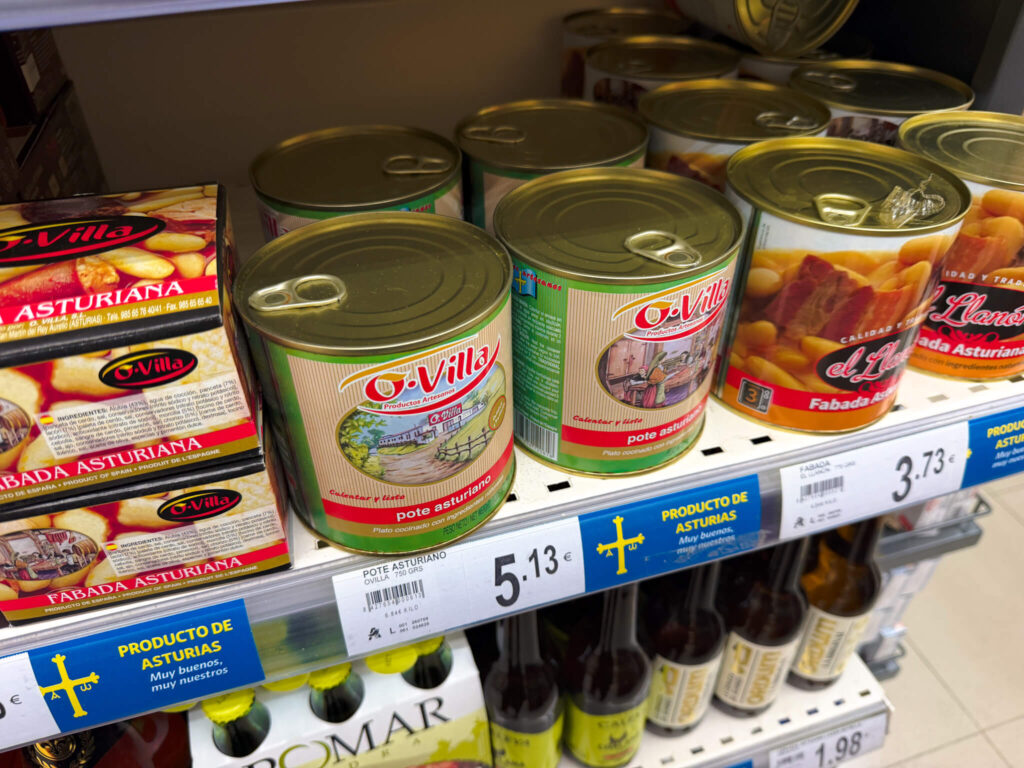
Some of the most iconic local foods in Asturias include fabada asturiana (a traditional bean stew), cachopo (a breaded meat dish), pote asturiano, Cabrales cheese (a bold blue cheese and one of the popular food souvenirs from Spain), casadiellas (a typical local pastry filled with nuts and sugar), and tarta de frixuelos (a layered pancake cake).
The region’s most traditional drink is sidra (natural apple cider), which is deeply rooted in local culture. Around the area of Villaviciosa, you’ll find countless apple orchards – it’s the heart of cider production in Asturias. You can read more about the traditional dishes of Asturias in this post.

Landscapes and legends of Asturias
Thanks to its lush, green landscapes, Asturias is home to some of the most magical forests in Spain, including Robledal de Muniellos – the largest oak grove in the country – and the enchanting Hayedo de Montegrande.
The region is also steeped in unique Spanish folklore, filled with mythological creatures such as the Busgosu (the guardian of the forests) and Les Xanes (fairy-like nature spirits). These legends add an extra layer of wonder to Asturias’ already mystical atmosphere.
Pin it:

For more Spain travel tips check out my Pinterest board Spain Travel Collection and Flipboard Travel to Spain.

- Accommodation: For short stays, I usually book via Agoda and Booking
- Tours&excursions: My favorites for guided tours are GetYourGuide, Viator, and Eatwith
- Museums&attractions: Get mobile tickets for attractions via Tiqets (use ATC5 code for a 5% discount via this link)
- Semi-private & private tours: LivTours is my favorite place for unique & crafted experiences in Europe
- Top E-Sim: To avoid roaming fees, I like Holafly (use ATLIFESTYLECROSSROADS for for a 5% discount)
- Flights: Find the best deals with Skyscanner and Kiwi
- Train&bus tickets: Currently, I book via Omio
- Car rental: To find the best deals, I use Discover Cars
- Shop My Level8 Suitcase: get 15% off with the code ATC15 here
- Travel Wellness: Track your sleep, recovery and jet lag with the Ultrahuman Ring (10% off with code UHLIFESTYLEC10)
- Transfers: For individual transfer services, I like Welcome Pickups and Kiwitaxi
- Suitcases&Luggage: Discover where to store your luggage on the go with Radical Storage
- Travel Insurance: Find the best trip insurance plans via VisitorsCoverage
- Compensation for delayed/canceled flights: Check out AirHelp
- Renting Bikes: To find motorcycles, scooters, quads, and bicycles, I use BikesBooking
- Website Owners: For hosting services, I work with and recommend Lyrical Host (get 10% off with my code ATC10)
- Internet Security on the road: Connect safely to public Wi-Fi and bypass censorship with NordVPN


I’ve never considered visiting this area before! It sounds like an underrated place to explore! I’ve only ever done a road trip in my home country Western Australia but this sounds amazing.
Beautiful area and stunning pictures! I especially liked the Playa de Silencio, what a gorgeous view!
I hiked some of the Asturias region when I did the Camino Primitivo, and it really is a beautiful place. I’d love to see more of it, like all the playas you’ve included here, as I didn’t see these on my route. Great inspo! 🙂
Amazing blog post! I want to visit Northern Spain soon. This blog post has come at the right time. I love the images of the Playa del Silencio, the Holy Cave of Covadonga and la Cuevona. Going by your images, this part of Spain looks totally awesome. I am bookmarking your blog post for my reference when I travel. 🙂
hey Anna!
I’ve never heard about this place before, but honestly, it sounds like a wonderful destination to plan a trip.
What time of the year have you been there?
It´s a great Spanish region to visit, even though it rains a lot! I visited in July
Thank you for the info!