
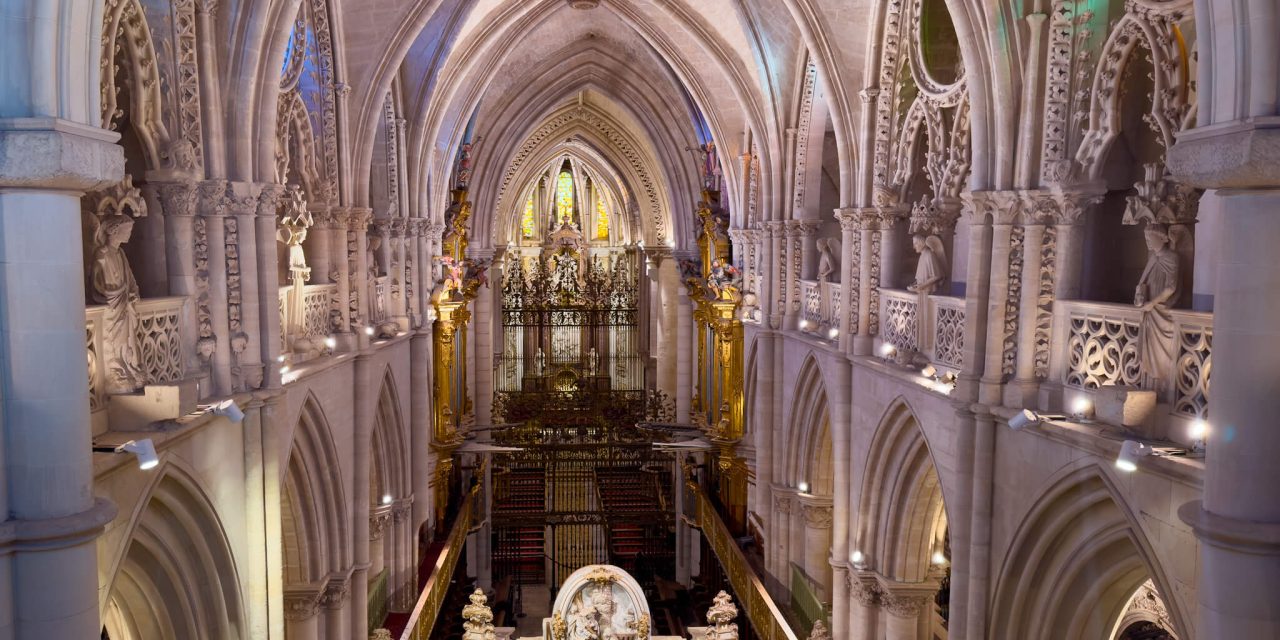
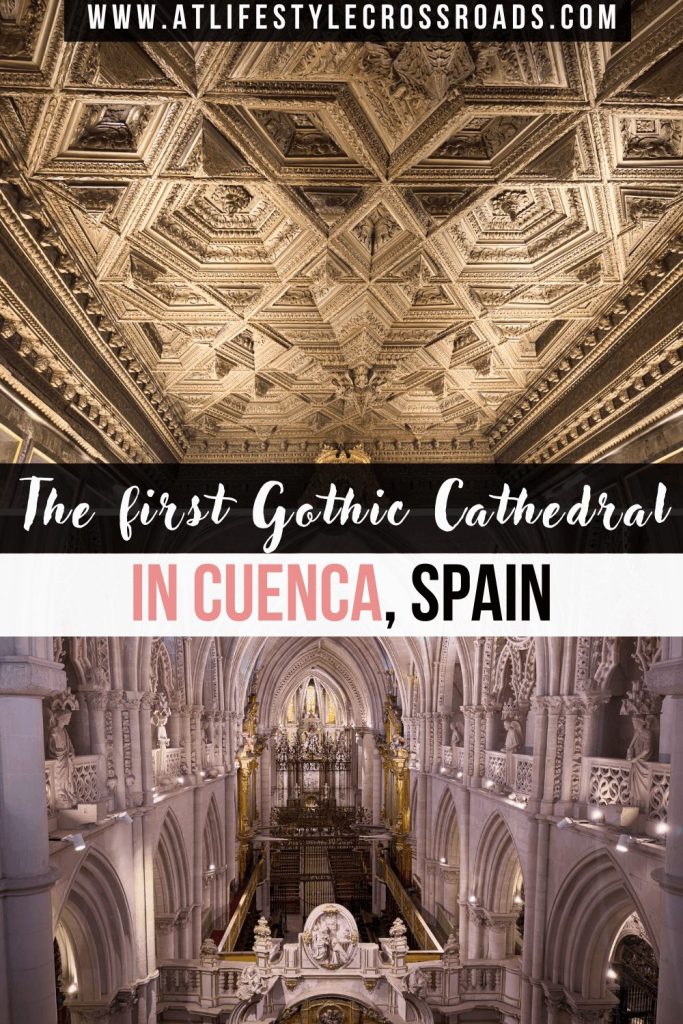
Tucked away in central Spain, Cuenca Cathedral is a hidden Gothic gem among the country’s great religious landmarks. Its stunning interiors are one of its best-kept secrets. In this post, I’ll share highlights from my recent visit – part of a recent Cuenca road trip – to Spain’s very first Gothic cathedral.
- This post contains affiliate links from which I earn a commission (at no extra cost to you). For more info, please read my disclosure. As an Amazon Associate, I earn from qualifying purchases.
Visiting the Cuenca Cathedral in Central Spain
Visiting Cuenca
Cuenca is one of central Spain’s most underrated regions – often overlooked by international visitors but full of hidden gems waiting to be discovered. In recent years, it has gained popularity thanks to its convenient location between Madrid and Valencia. This year, we took a family road trip through the Cuenca region, uncovering scenic hikes, secret landmarks, and charming villages. But what truly inspired me to write this post was the picture-perfect Cuenca Cathedral – an architectural treasure that deserves a spotlight of its own, especially for fellow art and history lovers.
Spain is home to many stunning cathedrals, but discovering one off the tourist radar makes the experience feel even more special. Cuenca Cathedral is a perfect example of how Spain offers so much more than just Madrid and Barcelona. In fact, even a 3-week itinerary would barely scratch the surface of the country’s hidden villages, lesser-known museums, and natural wonders.

About Cuenca Cathedral
The Cuenca Cathedral is considered one of the top landmarks in the Castile-La Mancha region in Central Spain and is easily accessible either on a a road trip between Madrid and Valencia or as a day trip from either city, thanks to the high-speed train connections.
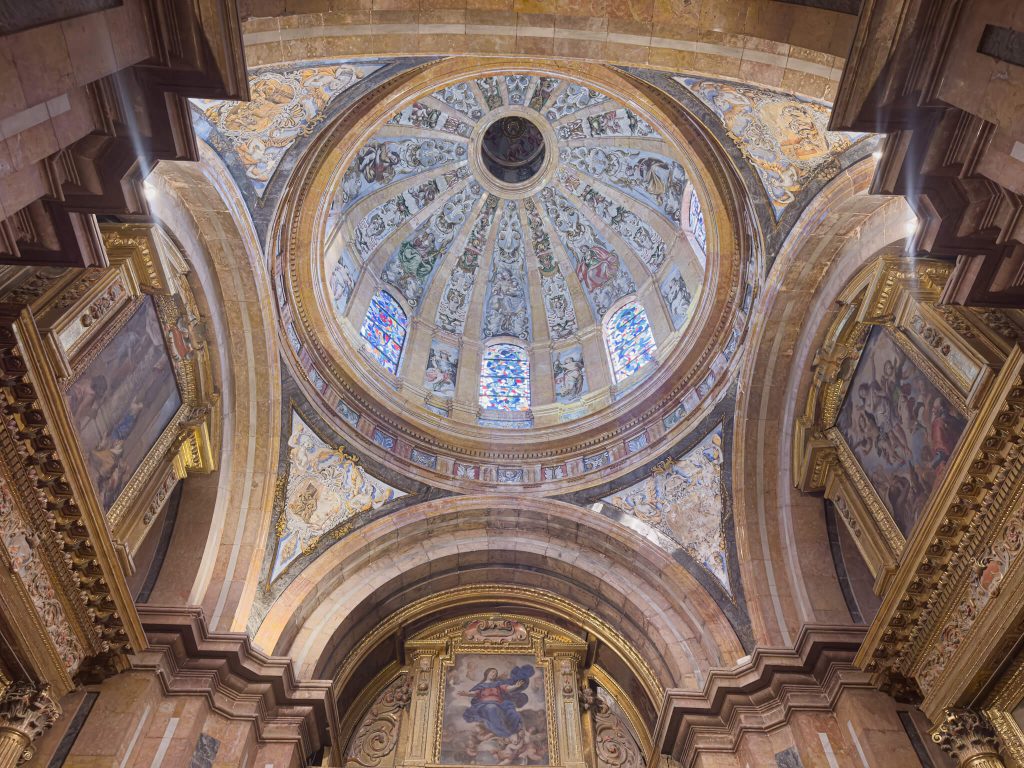
Its full name, Catedral de Santa María y San Julián de Cuenca, hints at the rich history behind its walls. The cathedral’s best-kept secrets are its awe-inspiring interiors and the two original El Greco paintings housed in its museum.
When I first visited Cuenca back in 2016, I actually skipped the cathedral – at first glance, it didn’t seem particularly striking. But I couldn’t have been more wrong…

The History of Cuenca Cathedral
The Famous Reconquista
The origins of Cuenca Cathedral date back to the 12th century. Like many religious buildings in Spain, it was constructed on the foundations of an old Arab mosque following the Reconquista – a period when Christian forces reclaimed territory from Muslim rule (you can explore more on this topic in my curated list of Spanish documentaries).
It often feels as though building monumental churches atop former mosques became a symbolic priority for the Spanish monarchs. Even today, if you venture into the most remote corners of the country, you’ll find a striking church or monastery at the heart of every village – often the most beautiful and well-preserved structure around.
-The Church as an institution has long played a central role in Spain’s history, particularly during the era of the Catholic Monarchs and the Spanish Inquisition. The upside for art and history lovers? – Many extraordinary works of architecture and sacred art have survived the centuries, carefully protected within these religious spaces.
Building the Cathedral of Cuenca
The city of Cuenca was officially conquered from the Moors in 1177 by King Alfonso VIII of Castile. Interestingly, it was his wife, Eleanor of Plantagenet – of English and French royal lineage – who played a key role in shaping the architectural vision of the Cuenca Cathedral. She is credited with inviting avant-garde artists and architects from France, introducing early Gothic influences that would define the cathedral’s style.
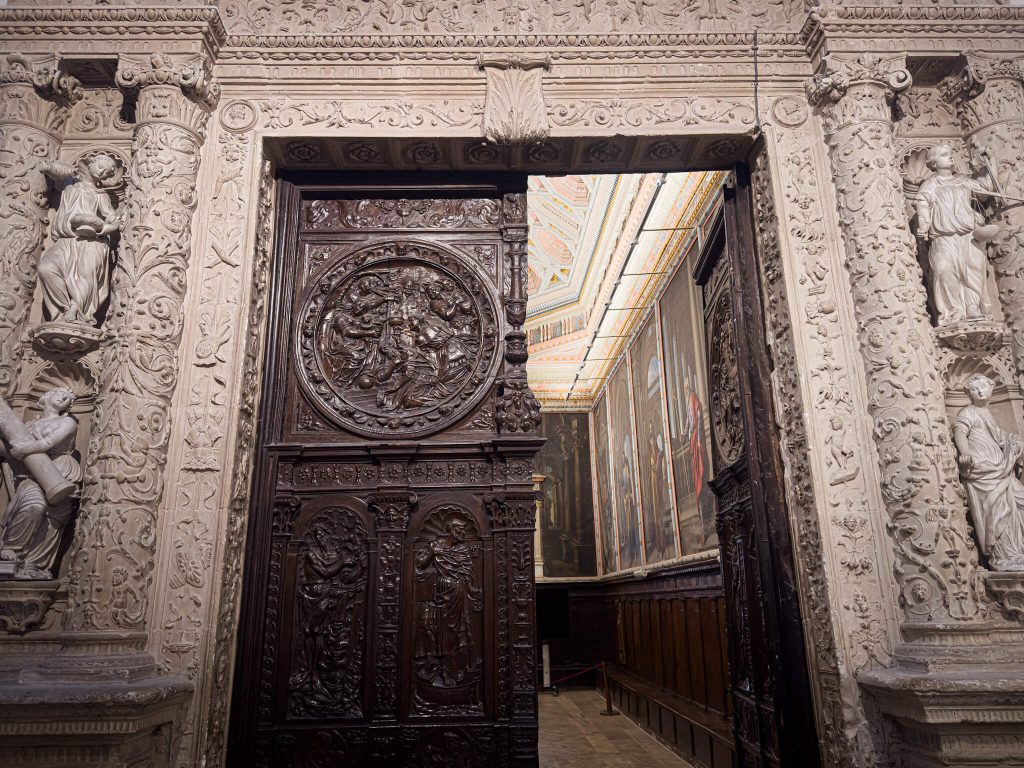
Many historians believe Cuenca Cathedral to be the first Gothic cathedral in Spain. Construction began soon after the conquest and was completed in 1257, taking 61 years to finish. In the 16th century, the exterior underwent major renovations under the guidance of Juan de Herrera, the renowned Renaissance architect behind El Escorial.
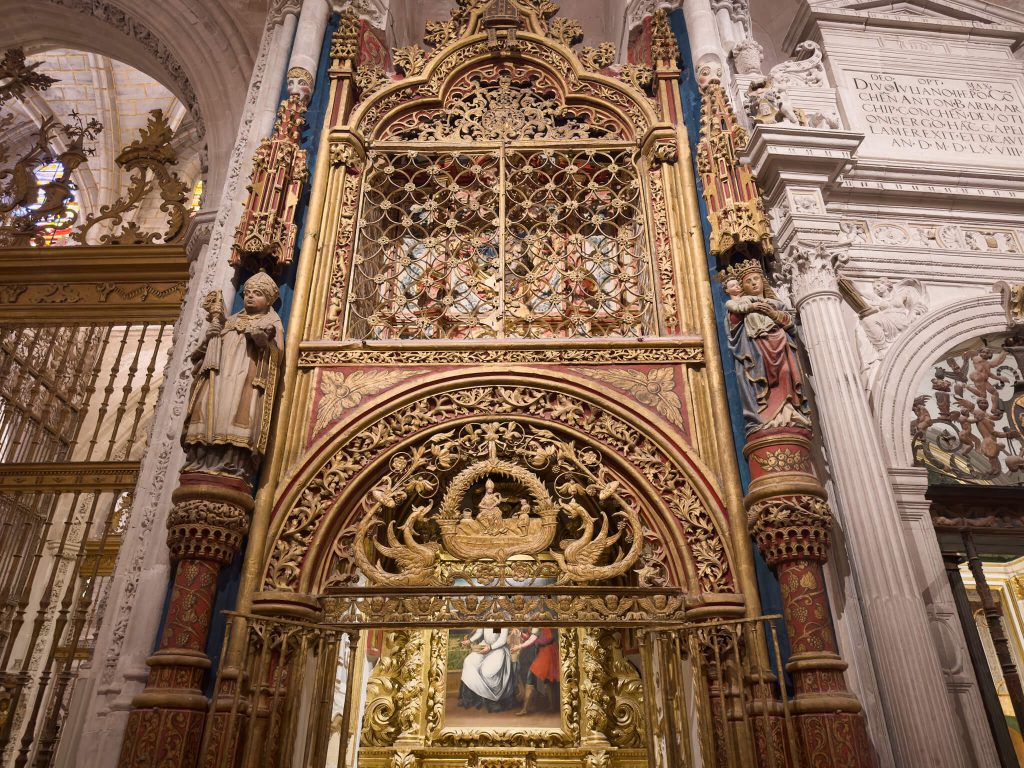
The 18th century brought further changes in the Baroque style, including updates to the façade and towers, and the addition of a new main altar adorned with sculptures by Pasquale Bocciardo.
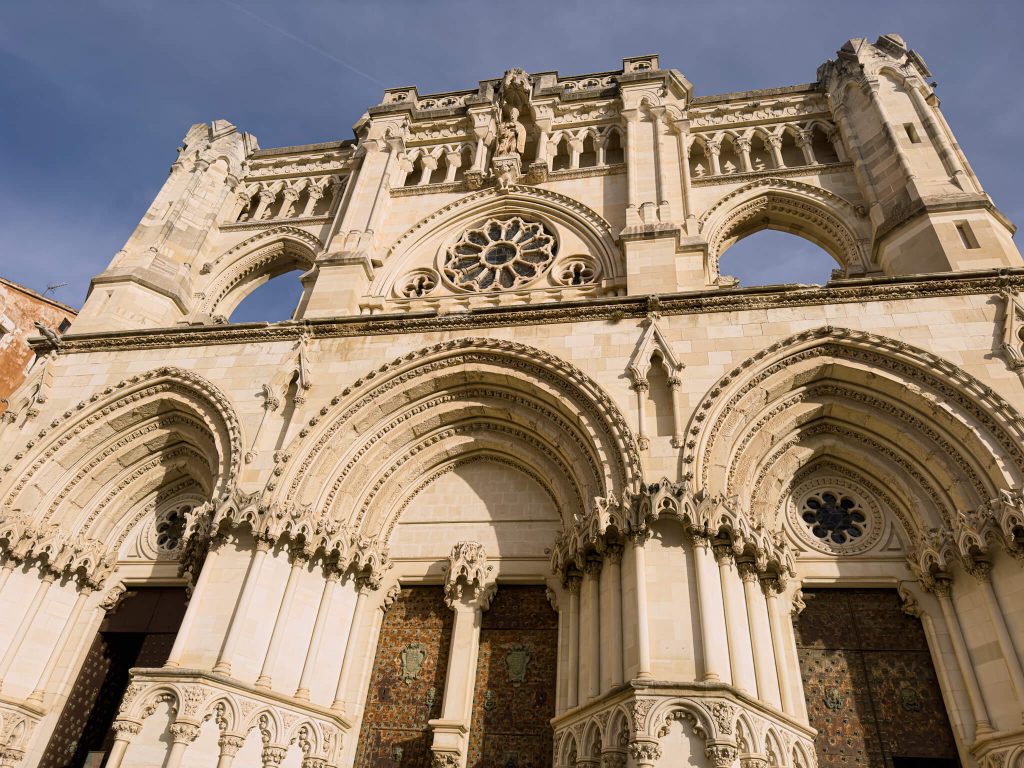
Tragedy struck in 1902 when the Giraldo Tower collapsed, killing four people and causing significant damage to the façade and stained glass windows. This led to a 20th-century restoration project that embraced both original Gothic and neo-Gothic elements.
Today, many draw comparisons between Cuenca Cathedral’s neo-Gothic façade and France’s iconic Reims Cathedral and Notre Dame. The new stained glass windows, added during the restoration, were designed by modernist artists Gerardo Rueda and Gustavo Torner, reflecting the artistic influences of cities like Barcelona, Reus, and Tortosa.



Planning a visit to the Cuenca Cathedral
If you’re planning a visit to Cuenca Cathedral, you can check reviews and current opening hours here, and don’t forget to check out my one-day Cuenca itinerary here, along with other Spain travel planning resources here.
One of the things I especially appreciated about visiting the Cuenca Cathedral was that they offer audio guides specifically designed for kids, making it a family-friendly destination.
To make the most of your visit, I recommend getting the combined ticket (10.50€ per person), which includes access to the Tower of San Pedro and the nearby Museo Diocesano, home to two original El Greco paintings.
You can also easily combine a visit to Cuenca with these itineraries:
- Madrid to Valencia road trip (read more)
- Valencia road trip (read more)
- Cuenca countryside road trip (read more)
- Don Quixote-themed itinerary (read more)
If you’re traveling with kids, ask for the family ticket (19€ for 2 adults and 1 child). It includes a small supplement of 3€ for each additional child aged 8 and up, while children under 8 enter free. For our family, this option turned out to be even more affordable than two regular tickets.
You can get a glimpse of my visit to the Cathedral of Cuenca via this Tiktok video.
Pin it
For more Spain travel tips check out my Pinterest board Spain Travel Collection and Flipboard Travel to Spain.

- Accommodation: For short stays, I usually book via Agoda and Booking
- Tours&excursions: My favorites for guided tours are GetYourGuide and Viator
- Museums&attractions: Get mobile tickets for attractions via Tiqets (use ATC5 code for a 5% discount via this link)
- Semi-private & private tours: LivTours is my favorite place for unique & crafted experiences in Europe
- For Foodies: Eatwith is a unique platform for finding culinary experiences with locals around the world
- Audio guides: Book audio excursions & tours in 35+ countries via WeGoTrip
- Flights: Find the best deals with Skyscanner and Kiwi
- Driving in a new country? – Check out Tripiamo guides (do not miss Tripiamo Driving in Spain Guide)
- Train&bus tickets: Currently, I book via Omio (10% off with code ATC10 for first-time customers)
- Car rental: To find the best deals, I use Discover Cars
- Top E-Sim: To avoid roaming fees, I like Holafly (use ATLIFESTYLECROSSROADS for for a 5% discount)
- Shop My Level8 Suitcase: get 15% off with the code ATC15 here
- Internet Security on the road: Connect safely to public Wi-Fi and bypass censorship with NordVPN
- Transfers: For individual transfer services, I like GetTransfer and Kiwitaxi
- Suitcases&Luggage: Discover where to store your luggage on the go with Radical Storage
- Travel Insurance: Find the best trip insurance plans via VisitorsCoverage and EKTA
- Compensation for delayed/canceled flights: Check out AirHelp and Compensair
- Renting Bikes: To find motorcycles, scooters, quads, and bicycles, I use BikesBooking
- Package Tours: Head to CheapOair and Expedia
- For Bloggers: To monetize my blog, I work with Travelpayouts and Stay22
- Website Owners: For hosting services, I work with and recommend Lyrical Host (get 10% off with my code ATC10)




Recent Comments