

What’s traveling off the beaten path without trying traditional Spanish food in local villages? Discovering new, local restaurants on the road has become an essential part of my foodie adventures. Follow this new blog series to keep up with all the non-touristy dishes I continue to uncover along the way.
- This post contains affiliate links from which I earn a commission (at no extra cost to you). For more info, please read my disclosure. As an Amazon Associate, I earn from qualifying purchases.
Traditional Spanish Food in the Villages
About Traditional Spanish Food
While you’ll occasionally discover amazing new Spanish foods on the road through my IG Restaurant Highlights, I plan to share more traditional Spanish dishes from local villages through a series of posts from time to time. Additionally, you can find plenty of authentic Spanish recipes on my blog, Viva Spanish Kitchen.
Food in Spain
We can all agree that when it comes to food, Spanish people truly know how to embrace regional ingredients and create something bursting with flavor. Did you know that Spain has more bars per capita than any other EU country? It’s in these local bars and small restaurants where traditional regional cuisine is passed down from parents to children. You’ll often find entire families working together. There’s nothing I enjoy more than visiting family-owned restaurants and sampling homemade dishes. In today’s modern, globalized world, this kind of travel experience only becomes more valuable with each passing day.
I absolutely love featuring these places on my blog. They are so authentic – exactly what we all crave, right? Plus, I never mention that I own a travel blog, so I can evaluate the food and service just like any other customer. You can trust my reviews and keep track of hidden gems that you won’t find in any guidebook.


Regional Food and Gastronomic Events in Spain
Some of the best travel experiences in Spain for foodies are the local Gastronomic Weeks. Check out my posts on Hazelnut Gastronomic Weeks and Artichoke Gastronomic Weeks for more details.
Moreover, Spanish cuisine is as diverse as its regions – both in terms of landscapes and traditions. In Southern Spain, you’ll find delicious tapas; in San Sebastian, pintxos; and in Valencia, paella and almuerzo. But what can you discover off the beaten path in Spain, outside the major tourist hubs? That’s what we’ll explore in this blog series, Traditional Spanish Food in the Villages.

Traditional Spanish Food: Delicious Dishes I Have Recently Tried in Spain
1. Torreznos in Soria
During my recent trip to Soria, I not only had the chance to explore Numancia, one of my favorite landmarks this year, but I also couldn’t miss the opportunity to try torreznos, the most typical dish of Soria.
For those who have never heard of it, torrezno is a crunchy bacon snack made from pork belly.
It was a spontaneous stop in the village of San Leonardo de Yagüe. We were simply looking for local bars with decent ratings on Google (for drinks and snacks) and discovered Bar El Hogar in San Leonardo de Yagüe. Apparently, this place is known for having some of the best torreznos in Soria. By pure accident, we ended up trying the region’s most authentic dish in one of its most local settings. I’m normally not a fan of pork, but I have to admit that torreznos was delicious. So, if you’re a meat lover, definitely give it a try.

2. Parillada de Carne + Rabo de Toro in
While exploring the province of Castellón, locals recommended one of the most popular spots to enjoy the traditional almuerzo in the Valencia region – Casa Julián, located in the small village of La Barona. The traditional almuerzo (a late breakfast) in the small villages of the Valencia region often resembles an early lunch, leaving you so full that you might not feel hungry for the rest of the day. This tradition dates back to a time when locals worked hard in the fields, making a hearty breakfast essential. Nowadays, it’s often an excuse for Spaniards to gather with friends for the entire morning, especially on weekends.
My husband and I have already visited Casa Julián several times. Tombet de Cordero (lamb stew) was one of the most delicious dishes there. More recently, we also tried Rabo de Toro, a classic of traditional Spanish cuisine. Rabo de toro is a bull’s tail stew, considered a cold-weather delicacy in Spain. We also enjoyed parrillada de carne, a selection of grilled local meats, which is a very traditional dish to try in almost any non-coastal Spanish village.

3. Conejo con Caracoles + Crema Catalana in Girona
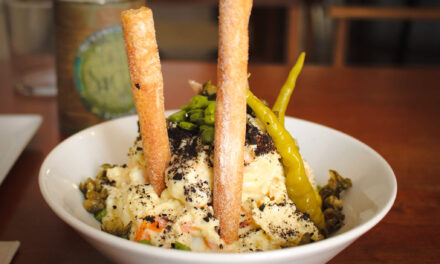
During our family trip across Catalonia, we found ourselves near the small town of Santa Pau around lunchtime. Spontaneously, we started searching for nearby restaurants with positive reviews and discovered Restaurant Can Met in Mieres. One of the most traditional local dishes they offered was Conejo con Caracoles – rabbit with snails. Rabbit meat is a popular ingredient in traditional Spanish cuisine, especially in rural areas of Spain where hunting is common. In fact, the country’s name, Hispania, from Roman times, means “land of rabbits.”
While rabbit dishes are popular throughout Spain, snails are particularly beloved in Catalonia and Valencia. Although I’m usually not a fan of snails, the homemade look of all the food at Restaurant Can Met convinced me to give it a try. Needless to say, it was delicious.
For dessert, they served the very popular Crema Catalana, a classic Spanish treat. I’ve had it many times before, but I’ve never enjoyed one as delicious and homemade as this.

4. Local Pastries in Teruel
While exploring the secret villages of Teruel and enjoying a weekend in Matarranya, I couldn’t resist visiting a traditional local bakery (or panadería in Spanish). The bakery, called Horno de Pan Dilla Pastas Típicas, is located in the small town of La Fresneda, near one of the top hikes in Spain – Parrizal de Beceite. I chose pastries flavored with anise, orange, nuts, and raisins, as well as meringue with almonds. We also bought a cottage loaf, known as hogaza in Spanish.

5. Requeson con miel in Torla
As the Spanish Pyrenees is one of my favorite travel destinations in the entire Iberian Peninsula, you can expect to find many local dishes and restaurants featured in this blog series: Traditional Spanish Food in Villages. After hiking in Parque Nacional de Ordesa y Monte Perdido, we enjoyed lunch at Restaurante La Cocinilla in the small town of Torla-Ordesa.
Although located in a tiny village, Restaurante La Cocinilla was quite upscale. While the cuisine had a creative twist, they also offered a few delicious local specialties, such as requesón con miel – cottage cheese with honey. While this dish can be found throughout Spain, it is especially typical in Catalonia, where it is called Mel i Mato. In fact, although Torla is located in Huesca/Aragón, it borders the Catalan region of Baqueira/Vall d’Aran. As a result, the local cuisine often shares similarities with the specialties of both regions.

6. Pan de Calatrava in Castellon
After exploring the Spanish ceramics of Alcora, we headed to a charming, local restaurant, El Mangranar, near the small town of Atzeneta del Maestrat. The location was so peaceful and set in the beautiful countryside – I loved everything about it. El Mangranar is also a hotel, making it an ideal spot for anyone looking to escape the hustle and bustle of the city. It would be a perfect weekend getaway in Spain.
For dessert, El Mangranar offered either flan or pan de calatrava. The latter is a type of bread pudding originally popular in the Spanish region of Murcia, but nowadays it can be found throughout Spain.

7. Local Cheese Plate in Extremadura

The region of Extremadura is renowned throughout Spain for its gourmet jam and cheese. We ordered both and thoroughly enjoyed our experience at the restaurant Las Mayas, located in the small village of Barcarrota.
The most popular local cheeses include La Torta del Casar, Queso de la Serena, and Queso Ibores, but there are many other varieties to try in Extremadura. In fact, there’s even a cheese-tasting itinerary called La Ruta del Queso Extremeño.
8. Coca de Patata + Horchata de Almendra in Mallorca
While Mallorca’s gem town of Valldemossa deserves a spot on the list of romantic places in Spain and charming medieval towns, it is also known for some local specialties. You may have heard of Valencia’s horchata drink made with chufa (yellow nutsedge), but I’ve honestly never had horchata made with almonds before. It was delicious, very much like the traditional local pastry coca de patata, which is made with potato, egg, and sugar.

9. Gazpacho Manchego in Castile La-Mancha

While traveling along the Don Quixote route in the Castile-La Mancha region, I tried one of the local specialties, Gazpacho Manchego (which, to my surprise, had nothing to do with the typical Andalusian gazpacho). Gazpacho Manchego is a hearty stew made with rabbit, chicken, and torta cenceña (a type of local unleavened bread).
The restaurant along the way was called Casa Rocío, located in Granja de Iniesta, Cuenca. Most of the dishes on the menu were very traditional to the area. We ordered a plate of seasonal grilled mushrooms called niscalos (which I love to order during the autumn season in Spain).
10. Arroz Caldoso con Gueñas y Alubias in Valencia
After visiting the mysterious Cornudilla and the stunning caves of the Valencia region, we enjoyed lunch at one of the local restaurants in Requena – Hotel Doña Anita. While rice is the most iconic dish of the Valencian Community, the variety of rice-centered dishes continues to surprise me. This time, Arroz Caldoso con Gueñas y Alubias was a delightful discovery. It was essentially a ‘brothy rice’ with meat and beans, but it had such a rich flavor.

Read more about my foodie experiences in Spain:
- Best Local Food Experiences in Spain Not To Miss (read it)
- Top Foods in the Pyrenees of Spain (read it)
- Tapas & Flamenco Tour in Barcelona (read it)
- Delicious Breakfast in Madrid: My Favorite Spots & Avocado Toasts (read it)
- My Amazing Spanish Cooking Class in Madrid (read it)
- Family, Countryside, and Cooking The Traditional Paella (read it)
- Visiting Basque Cider House near San Sebastian (read it)
- Breakfast in Valencia: Cute Cafes You Will Love (read it)
- Spanish Eating Habits: Almuerzo in Valencia (read it)
- 10+ Best Local Food Souvenirs from Spain (read it)
- An Amazing Artichoke Tasting Menu in Benicarlo (read it)
- Gastronomic Weeks in Spain: A Hazelnut Menu (read it)
- Best Spanish Tapas and How to Make Them at Home (read it)
- Winter Foods in Spain: The Best Hearty Spanish Stews and Soups to Try (read it)
Pin it

For more Spain travel tips check out my Pinterest board Spain Travel Collection and Flipboard Travel to Spain.

- Accommodation: For short stays, I usually book via Agoda and Booking
- Tours&excursions: My favorites for guided tours are GetYourGuide and Viator
- Museums&attractions: Get mobile tickets for attractions via Tiqets (use ATC5 code for a 5% discount via this link)
- Semi-private & private tours: LivTours is my favorite place for unique & crafted experiences in Europe
- For Foodies: Eatwith is a unique platform for finding culinary experiences with locals around the world
- Audio guides: Book audio excursions & tours in 35+ countries via WeGoTrip
- Flights: Find the best deals with Skyscanner and Kiwi
- Driving in a new country? – Check out Tripiamo guides (do not miss Tripiamo Driving in Spain Guide)
- Train&bus tickets: Currently, I book via Omio (10% off with code ATC10 for first-time customers)
- Car rental: To find the best deals, I use Discover Cars
- Top E-Sim: To avoid roaming fees, I like Holafly (use ATLIFESTYLECROSSROADS for for a 5% discount)
- Shop My Level8 Suitcase: get 15% off with the code ATC15 here
- Internet Security on the road: Connect safely to public Wi-Fi and bypass censorship with NordVPN
- Transfers: For individual transfer services, I like GetTransfer and Kiwitaxi
- Suitcases&Luggage: Discover where to store your luggage on the go with Radical Storage
- Travel Insurance: Find the best trip insurance plans via VisitorsCoverage and EKTA
- Compensation for delayed/canceled flights: Check out AirHelp and Compensair
- Renting Bikes: To find motorcycles, scooters, quads, and bicycles, I use BikesBooking
- Package Tours: Head to CheapOair and Expedia
- For Bloggers: To monetize my blog, I work with Travelpayouts and Stay22
- Website Owners: For hosting services, I work with and recommend Lyrical Host (get 10% off with my code ATC10)



Rabbit and snails? Yes please!! And those seasonal mushrooms look divine!! I do love simple Spanish cuisine.