
Here are some of the most interesting facts about Madrid. As the capital of Spain, the city is known for its rich history and as a cultural hub of the country. Whether you’re planning a trip or just love quirky facts, here are 22 things you may not know about this unforgettable city.
- This post contains affiliate links from which I earn a commission (at no extra cost to you). For more info, please read my disclosure. As an Amazon Associate, I earn from qualifying purchases.
Interesting Facts about Madrid
Here are some essential and surprising facts about Madrid that you should know before your visit – from its historic landmarks and vibrant neighborhoods to unique local customs and must-try foods!
22 Top Madrid Facts You Should Know Before Visiting
1. Center of all the national roads
Madrid, as the capital of Spain, holds a unique position as the central hub of the country’s national road network. Puerta del Sol is a bustling square in Madrid that marks Kilometer Zero, where all the major highways in Spain begin. This symbolic location not only represents Madrid’s geographic and cultural significance but also highlights the city’s role as the main point of connection between various regions of the country.
2. The Spanish Broadway
Madrid’s Gran Vía is often referred to as the “Spanish Broadway”, renowned as the world’s capital for Spanish-language musicals. Lined with stunning early 20th-century architecture, Gran Vía is home to many of Madrid’s top theaters, where you can enjoy unforgettable shows, including El Rey León (The Lion King).
The vibrant atmosphere of the street, with its popular brand shops, illuminated theaters, and bustling crowds, makes it one of the liveliest and most energetic places in the city.
3. FC Real Madrid
One of the most famous facts about Madrid for sports fans is that the city’s football club, FC Real Madrid, holds more European Cup titles than any other team, and many of the most iconic stars have played for it. Soccer fans never want to miss the Bernabéu Stadium tour when visiting Madrid.
4. The Egyptian Temple
Not many people know that Madrid has its very own Egyptian temple – the Temple of Debod, gifted by Egypt to Spain. This ancient structure dates back to the 2nd century BC and is especially popular at sunset, as it sits on a small hill offering stunning views of the city.

5. Spain’s most famous flea market
El Rastro in Madrid is Spain’s most famous flea market, coming alive every Sunday. It is a popular stop for travelers and locals alike, as the streets are filled with antiques, vintage clothing, and other quirky finds.
6. A city of iconic museums
Madrid is home to some of the most treasured art collections in Spain and is especially renowned for its “Golden Triangle of Art” – a trio of world-class museums – the Prado Museum, the Reina Sofía Museum, and the Thyssen-Bornemisza Museum.
Visitors can marvel at masterpieces by legendary artists such as Velázquez, Goya, El Greco, Picasso, Dalí, and Rubens, among many others. So, Madrid is an absolute must-visit for any art lover in Spain. Beyond the famous museums, there are also many epic lesser-known ones.
7. Madrid´s bullfight arena
Madrid´s bullfight arena has a seating capacity of almost 24,000 spectators. It is considered one of the most iconic corrida places in the world and has welcomed the greatest bullfighters of all time.
8. The Royal Palace
The Royal Palace of Madrid, although no longer the official residence of the Spanish monarchs, remains a powerful symbol of the nation’s rich royal heritage. With over 3,400 rooms, it is the largest functioning royal palace in Western Europe.
Constructed in the 18th century on the site of the former Moorish fortress the palace features magnificent Baroque and Classical architectural styles. Today, it is used for state ceremonies and official events, and it stands as one of Spain’s most visited landmarks.

9. A Bear and a Strawberry Tree
The El Oso y el Madroño statue, located in Madrid’s iconic Puerta del Sol square, represents the city’s historic coat of arms – a bear reaching up to eat fruit from a strawberry tree (madroño). This 20-ton bronze sculpture, standing 4 meters tall, has become one of the most recognizable symbols of Madrid.
The bear and tree have been associated with the city since the Middle Ages, symbolizing the harmony between nature and urban life, as well as the strength and resilience of Madrid itself.
10. World’s Oldest Restaurant
Restaurante Botín in Madrid, established in 1725, holds the Guinness World Record as the oldest continuously operating restaurant in the world. Located in the heart of Madrid near Plaza Mayor, this historic eatery has been serving traditional Spanish cuisine for nearly 300 years.
Botín is especially famous for its cochinillo asado (roast suckling pig) and cordero lechal (roast lamb), both cooked in the original wood-fired oven that has been in use since the restaurant opened.
11. Churros con Chocolate
Chocolatería San Ginés is one of the most iconic spots in Madrid to enjoy churros con chocolate, a classic Spanish treat. Established in 1894 and located near Puerta del Sol, this historic café has been serving crispy churros with thick, rich hot chocolate for over a century.

12. Hemingway
Madrid is famously mentioned at the end of Ernest Hemingway’s novel The Sun Also Rises, reflecting the author’s deep affection for the city. Hemingway spent significant time in Madrid and was a passionate admirer of Spanish culture – particularly bullfighting and La Rioja wine. During his visits, he frequented several of the city’s traditional bars and restaurants, including Botín, where he often dined on roast suckling pig, and La Venencia, a historic sherry bar that has preserved its old-world charm to this day.
13. The Green Capital
Madrid ranks among the greenest cities in Europe in terms of green space per capita, boasting over 250,000 trees spread across its parks, gardens, and tree-lined boulevards. One of its most famous green spaces is El Retiro Park, a UNESCO World Heritage Site and former royal garden that spans over 125 hectares.

14. House museums of famous Spaniards
Many of the most famous figures in Spanish history lived in Madrid, including Don Quixote author Miguel de Cervantes, and iconic painters like Francisco Goya and Joaquín Sorolla. You can even visit some of their former homes, which have been turned into museums. The neighborhood of Barrio de las Letras was home to legends like Cervantes and Lope de Vega. You can also walk along quotes engraved in the pavement.
A detailed PDF with locations visited by Cervantes is available here, but I highly recommend dedicating time to a separate Don Quixote road trip across Spain to truly immerse yourself in his legacy.
15. Dama de Elche
The Archaeological Museum of Madrid is a must-visit for history lovers in Spain, as it houses the country’s most famous ancient sculpture, the Dama de Elche, which remains one of Spain’s greatest historical mysteries.

16. Spanish New Year’s Eve
Madrid in December attracts many Spanish visitors seeking Christmas decorations and the festive holiday spirit. However, the biggest event is Spanish New Year’s Eve, or Nochevieja, which is broadcast live across the country every year.
The most iconic Spanish tradition is the eating of 12 uvas (12 grapes) at each stroke of the clock at midnight, symbolizing good luck for each month of the coming year. Thousands gather at Puerta del Sol, Madrid’s central square, to witness this moment and join in the countdown to the new year.
17. Tortilla de Patata
Tortilla de patata, or Spanish omelette, is a popular dish across Spain, but it holds a special place in Madrid’s culinary culture, regarded as one of the city’s most beloved and iconic dishes. The ideal version is crispy on the outside and soft and creamy on the inside.
Every year, Madrid celebrates the Jornadas Gastronómicas de la Tortilla de Patata, a gastronomic event dedicated to this quintessential Spanish dish. During this event, restaurants across the city compete to showcase their best versions, allowing locals and visitors alike to taste different variations, from traditional to creative twists.
18. Plaza de Cibeles
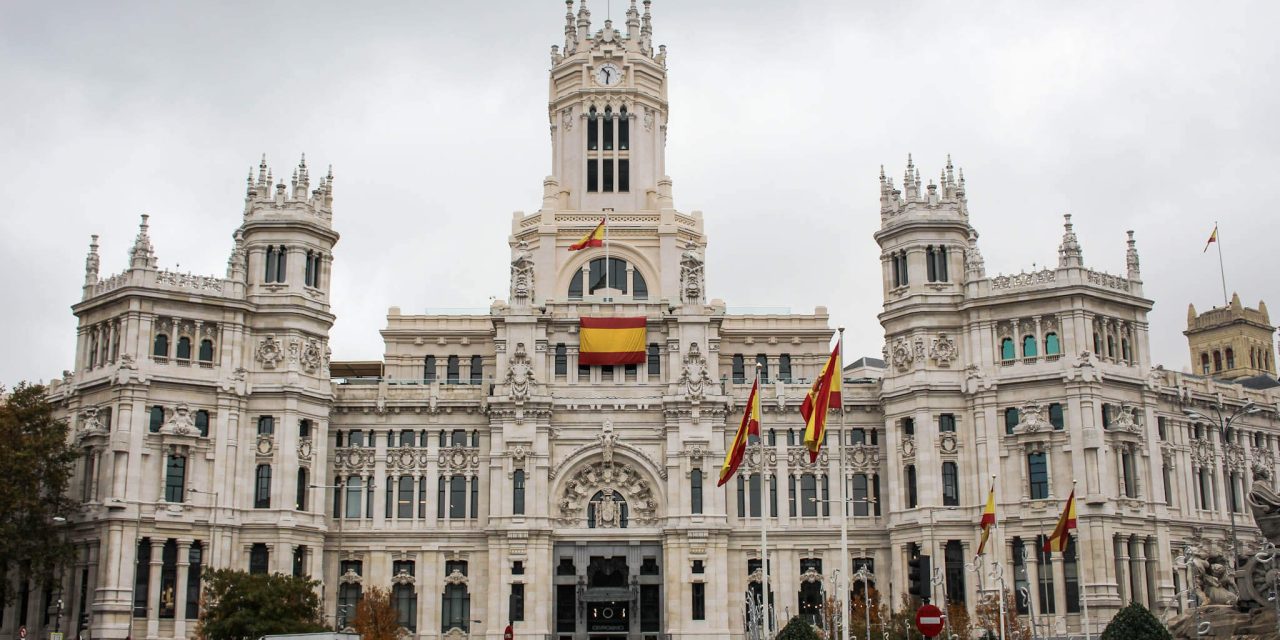
Plaza de Cibeles is one of the most iconic and photographed spots in Madrid, known for its grand fountain depicting the goddess Cybele, which has become a symbol of the city. The fountain is surrounded by majestic sculptures and is often illuminated at night.
Dominating the square is the Palacio de Cibeles, an impressive neo-classical building that serves as the Madrid City Hall. The palace, originally designed as a post office, boasts remarkable architecture, including a striking clock tower, and offers panoramic views of the city from its observation deck.

19. Not the first capital of Spain
One of the most curious facts about Madrid is that it is not the first capital of Spain. Before Madrid became the capital in the 16th century, the Spanish monarchy resided in Toledo, which was the capital for much of the Middle Ages and is still considered one of the most popular day trips from Madrid.
The decision to move the capital to Madrid in 1561 was made by King Philip II, who saw its central location as strategic for both governance and defense. Over time, Madrid became the heart of the Spanish Empire.
20. One of the World’s Largest Metro Systems
A handy Madrid fact for those planning a trip: Madrid’s metro system is the 7th longest in the world and one of the most efficient in Europe. My multiple trips to Madrid wouldn’t have been as jam-packed at all if it weren’t for the convenient metro system.
21. The origins of the name “Madrid”
The rich cultural past of Spain is reflected in the name of Madrid. In the 9th century, the Moors established a fortress at the site, and the Arabic name Mayrit later evolved into modern Madrid. The name Mayrit is believed to be derived from the Arabic word mayra (meaning “water” or “source of water”), referring to the streams and water sources that surrounded the area at the time.
Over the centuries, as the city grew and developed into the vibrant capital it is today, the name Mayrit gradually transformed, eventually becoming Madrid.
22. GBTQ+ friendly city
Madrid is known for being an LGBTQ+ friendly city. It hosts Spain’s largest Pride event, Madrid LGBTQ+ Pride (also called Orgullo), which attracts millions of visitors every year to celebrate diversity and equality. Madrid’s openness and progressive attitude are reflected in its numerous LGBTQ+ bars, clubs, and cultural spaces, particularly in neighborhoods like Chueca and Malasaña, which has become a hub for LGBTQ+ culture.
Planning a Madrid Getaway? Watch This First
If Madrid is your next destination, the video below is a great place to start. I answer the questions readers ask me most often, including where to stay, how to use public transport, and what not to miss during your visit.
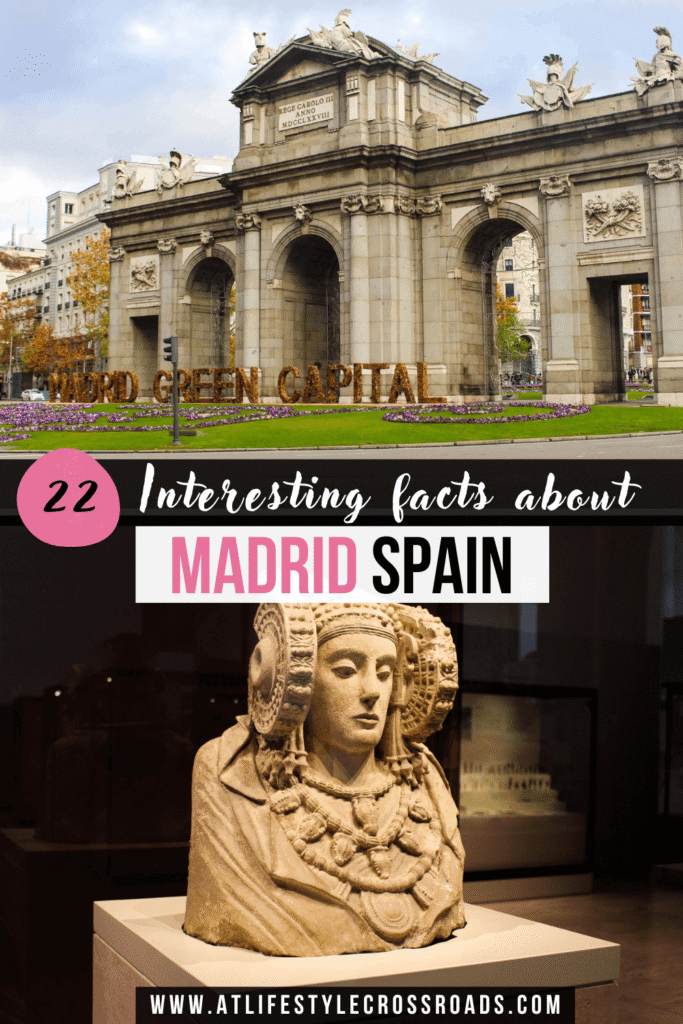
Pin it:
For more Spain travel tips check out my Pinterest board Spain Travel Collection and Flipboard Travel to Spain.

- Accommodation: For short stays, I usually book via Agoda and Booking
- Tours&excursions: My favorites for guided tours are GetYourGuide and Viator
- Museums&attractions: Get mobile tickets for attractions via Tiqets (use ATC5 code for a 5% discount via this link)
- Semi-private & private tours: LivTours is my favorite place for unique & crafted experiences in Europe
- For Foodies: Eatwith is a unique platform for finding culinary experiences with locals around the world
- Audio guides: Book audio excursions & tours in 35+ countries via WeGoTrip
- Flights: Find the best deals with Skyscanner and Kiwi
- Driving in a new country? – Check out Tripiamo guides (do not miss Tripiamo Driving in Spain Guide)
- Train&bus tickets: Currently, I book via Omio (10% off with code ATC10 for first-time customers)
- Car rental: To find the best deals, I use Discover Cars
- Top E-Sim: To avoid roaming fees, I like Holafly (use ATLIFESTYLECROSSROADS for for a 5% discount)
- Shop My Level8 Suitcase: get 15% off with the code ATC15 here
- Internet Security on the road: Connect safely to public Wi-Fi and bypass censorship with NordVPN
- Transfers: For individual transfer services, I like GetTransfer and Kiwitaxi
- Suitcases&Luggage: Discover where to store your luggage on the go with Radical Storage
- Travel Insurance: Find the best trip insurance plans via VisitorsCoverage and EKTA
- Compensation for delayed/canceled flights: Check out AirHelp and Compensair
- Renting Bikes: To find motorcycles, scooters, quads, and bicycles, I use BikesBooking
- Package Tours: Head to CheapOair and Expedia
- For Bloggers: To monetize my blog, I work with Travelpayouts and Stay22
- Website Owners: For hosting services, I work with and recommend Lyrical Host (get 10% off with my code ATC10)






Lots of great facts on Madrid. Thanks for sharing!
This is inspiring me to make a return visit. I can’t believe we didn’t know about (or visit) the Egyptian temple.
I love all these fun tidbits! It feels like you could live like a local with all these amazing tips. Great post, Anna!
Thanks for the list of things to know about Madrid! It’s one of my favorite cities but I’m always looking for new things to see and do when I go 🙂
I’ve been to Madrid, but I had no idea about some of these facts—especially the Temple of Debod and how central Puerta del Sol really is! I definitely missed El Rastro, and now I wish I had scheduled a Sunday just to experience that iconic flea market. Also, I’m surprised to learn that Madrid is one of the greenest cities in Europe—it didn’t feel like that at first glance. This post gave me even more reasons to go back and explore deeper!